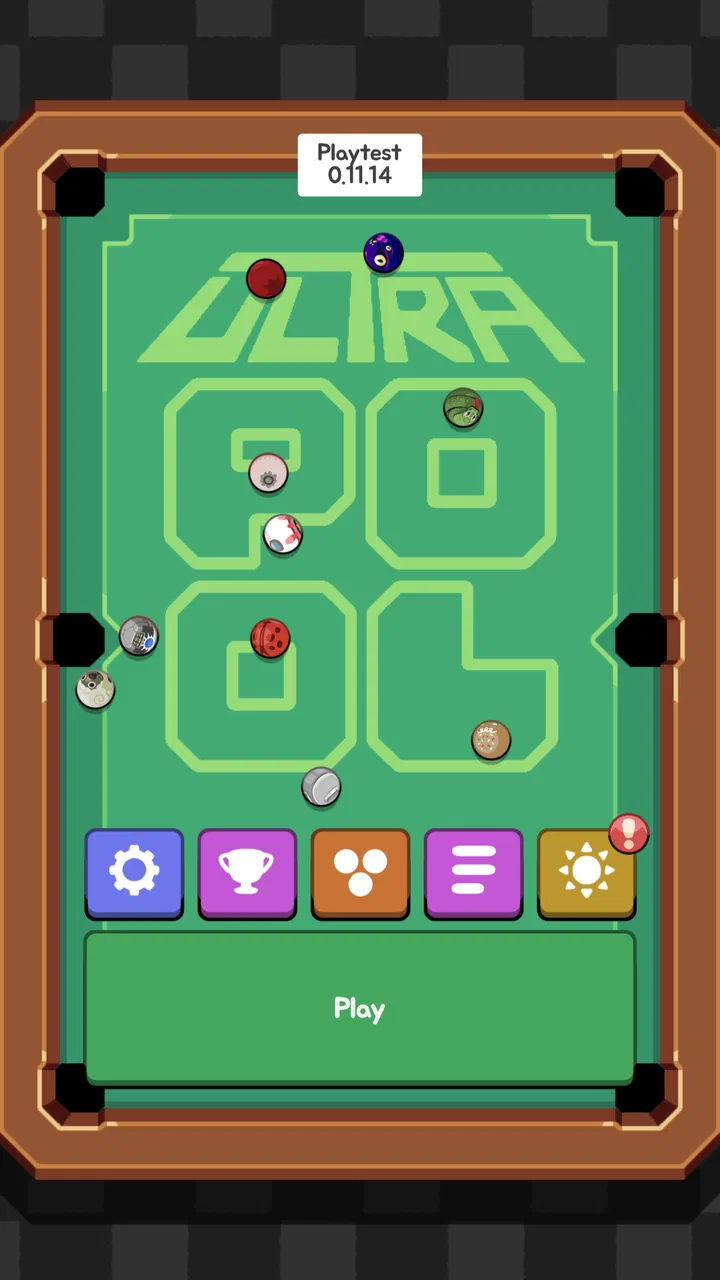
Ultrapool
- 4.9
- Rating
- 50.00K
- Installs
- Free
- Price

 Analysis by App-foxy
I went into Ultrapool expecting a familiar pool game with a few unusual rules, but its roguelike direction changes the way I think about every shot. This is not simply about clearing a table and moving on. The appeal comes from making a choice, accepting its consequences, and trying to build a stronger run from what the game gives me. That makes it a much better fit for players who enjoy planning under pressure than for anyone looking for a purely relaxed billiards simulator.
Developed by offbrand games, this free strategy game is available to a broad audience with an Everyone content rating. It has attracted a 4.9 average from around 1.3 thousand ratings and more than 50 thousand installs, which suggests that its compact idea has found a receptive audience. I can understand why: the pool foundation is immediately recognizable, while the run-based structure gives ordinary shots more weight than they would have in a standard table game.
How Ultrapool feels in actual play
The first thing I noticed is that the game’s speed is less about rapid tapping and more about how quickly I can read a situation. A pool shot naturally asks me to pause, judge angles, and decide whether a safe option is better than an ambitious one. The roguelike layer makes that pause meaningful. I am not only asking whether I can sink a ball; I am considering what kind of position I want to leave for the next decision and whether a risky attempt is worth the possible setback.
You May Also Like

 Pandora - Music & Podcasts
Pandora’s Music Is Easy to Start, but Harder to Recover
Pandora’s strength is its low-effort path from a seed to a station. Its weak spot is how much confidence it asks you to place in connection, setup, and quiet recovery.

 8 Ball Pool
 Is Built on Rivalries, Rematches, and Routine
A close look at the rivalries, rematches, shared routines, and unanswered safety questions that turn a quick pool match into a persistent mobile community.

 Samsung Music
’s Quiet Strength Is Playing What You Already Own
Its reach comes less from spectacle than from dependable access to a personal library. That simplicity is both the app’s strongest retention engine and its ceiling.

 AccuWeather: Weather Radar
AccuWeather Review: A Quick, Clear Forecast for Everyday Decisions
For everyday plans, the best forecast is the one you can understand quickly. AccuWeather makes rain timing, radar, and local conditions easy to act on, with a few trade-offs.

 Hill Climb Racing
Why Hill Climb Racing Still Turns Crashes Into One More Run
A tiny car, a bumpy hill and one more upgrade: Hill Climb Racing keeps resurfacing because its simple chaos makes every near-miss feel personal.

 AliExpress - Shopping App
AliExpress Makes Global Shopping Feel Personal, but Shoppers Bear the Risk
AliExpress turns a global marketplace into a pocket-sized discovery engine. Its reach is useful, its shopping loop compelling, and its trade-offs easy to miss.
More From Our News Desk
View All News


That gives the game a pleasing rhythm. Individual actions can feel quick, but a full session is shaped by thought rather than reflexes. I can pick it up for a short break, take a few deliberate turns, and put it down without needing the long commitment associated with many strategy games. At the same time, a careless shot can make the next stage harder, so the experience rewards attention even when the controls themselves are straightforward.
Players coming from ordinary pool apps should adjust their expectations. In a conventional billiards game, the main satisfaction usually comes from improving accuracy, learning table geometry, or competing directly with another player. Here, the table is only part of the problem. The surrounding run structure encourages experimentation, and a technically difficult shot may be attractive because of what it can unlock or preserve within that attempt. The important skill is not just potting balls; it is managing risk across a whole run.
I found that distinction especially useful when deciding whether to play aggressively. A difficult bank or combination can look impressive, but the correct choice is often the one that keeps the next position manageable. That is a subtle change from ordinary pool habits. The game asks me to think one or two decisions ahead, even when the immediate shot seems obvious.
Why the roguelike twist changes the strategy
The roguelike influence gives failed attempts more value than a simple win-or-lose match. When a run goes badly, I can usually identify a decision that caused the trouble: taking a low-percentage shot, ignoring the safer route, or treating a temporary advantage as if it were permanent. That makes repetition feel purposeful. I am not merely replaying the same table; I am refining how I evaluate choices.
This also creates a useful tension between consistency and discovery. A cautious player may prefer reliable shots and controlled progress, while a more adventurous player may accept volatility for a stronger position later. Neither approach feels automatically correct. The right answer depends on the state of the run, which is why the game has more strategic texture than its pool theme initially suggests.
One practical tip is to avoid judging a shot only by whether it can succeed. I try to consider the likely result if it works and the damage if it fails. A shot that leaves no useful follow-up can be worse than a modest play that keeps options open. This way of thinking is one of the game’s less obvious lessons, and it is valuable for anyone who normally plays pool by chasing the most visible target.
Another useful habit is to separate learning attempts from winning attempts. Early in a session, I am more willing to test an unfamiliar line and observe how the game responds. Once a run begins to look promising, I become more conservative. That simple change reduces frustration because I am no longer treating every attempt as equally precious.
Speed during longer or heavier sessions
Because the game combines pool decisions with a run-based strategy loop, its heaviest moments are likely to come from extended play rather than from a single dramatic action. A short session should feel naturally contained, while a longer one asks more from both the player and the device. I would not describe it as a game designed around constant spectacle. Its pressure comes from accumulating decisions, not from flooding the screen with activity.
That is good news for players who prefer readable strategy. I never feel pushed to act merely because the game is moving at a frantic pace. The slower decision-making gives me time to inspect the table and think through consequences. The trade-off is that someone seeking an arcade-style pool experience may find the tempo too deliberate, especially if they want immediate matches with little planning between shots.
During a longer run, mental load becomes more noticeable than any obvious action speed. A player can start by making careful choices and then gradually become careless because the same kind of evaluation is required again and again. My best practical advice is to pause after a major change in the run instead of firing the next shot automatically. Treating each new situation as a reset helps prevent the common mistake of carrying an old plan into a changed table.
The game is also better suited to focused play than to distracted play. If I am checking messages between shots or playing while doing something else, I am more likely to misread the position and blame the loss on bad luck. That does not make it demanding in a technical sense, but it does mean that its performance depends partly on the player giving it a little attention.
Stability and recovering from interruptions
Reliability matters more in a run-based game because losing progress feels more significant than losing a single casual round. My general impression is that the compact design makes the experience approachable, but I still recommend treating a promising run with care. Avoid closing the game immediately after an important decision, and do not assume that every interruption will be harmless simply because the current action is finished.
This is not a criticism of a confirmed technical fault; it is a sensible habit for any game where progress is structured around an ongoing attempt. A phone call, a low-battery warning, or an unexpected switch to another app can break concentration even when the game itself resumes normally. If I am playing for a few minutes, that risk barely matters. If I have invested much longer in a run, I prefer to finish at a natural stopping point.
Recovery is also psychological. The game benefits from a player who can accept a failed run without immediately forcing another one. Since the strategy comes from making choices under uncertainty, some attempts will be lost through a decision that seemed reasonable at the time. I find it more productive to remember the turning point, start fresh, and change one habit rather than trying to play faster or more aggressively.
That approach makes the game feel more stable as an experience, even when the outcome is unpredictable. I know what I am learning from a mistake, and I can carry that lesson into the next attempt. For me, that is more satisfying than a pool app where every failure simply means repeating a familiar challenge with no broader consequence.
What kind of phone is a sensible fit?
The game supports Android devices running version 7.0 or later, so it is not restricted to only the newest phones. That broad system requirement is helpful for people using older compatible hardware, although the exact feel can still vary from one device to another. Screen responsiveness, available memory, and general device condition all influence how comfortable a precision game feels, even when its underlying design is not focused on demanding visual effects.
I would keep expectations realistic on older or heavily loaded phones. If a device already struggles when several apps are open, closing unnecessary background activity before a longer session is a sensible precaution. This is less about chasing a benchmark and more about protecting the accuracy of the experience. In a game built around aiming and deliberate choices, inconsistent touch response would be more irritating than a merely modest visual presentation.
Storage and battery habits also matter in everyday use. A short break at home or during a commute is a natural setting, but I would avoid beginning an important run when the phone is nearly empty or likely to be interrupted. The game’s free entry makes it easy to try, yet the best experience still comes from giving it a stable moment rather than squeezing it into the most chaotic part of the day.
For example, I can imagine playing it during a lunch break. I start a run with enough time to think through several shots, then stop when the break ends instead of rushing the final decision. That scenario suits the game well because the action is compact, but the strategy remains engaging. By contrast, it is a poor choice when I have only a few seconds at a time and want instant, disposable rounds.
Where it beats ordinary pool games
Compared with a typical pool app, Ultrapool offers more reasons to replay a session. Standard alternatives are often better when I want direct practice, familiar rules, or a clean focus on cue control. They can also be preferable for players who want head-to-head competition or a predictable progression. Ultrapool is stronger when the attraction is uncertainty: deciding how much to risk, adapting to the current run, and learning from a chain of choices.
That difference makes it easier to recommend to strategy fans who do not normally seek out billiards games. The pool setting gives the decisions a clear physical shape, while the roguelike structure adds the larger arc. Someone who already enjoys run-based games may appreciate how every shot becomes part of a broader plan. Someone who mainly wants to perfect break shots may instead feel that the extra layer distracts from the sport.
There is also a trade-off in accessibility. The basic concept is easy to understand, but the best decisions are not always obvious. New players may initially assume that the most ambitious shot is the most rewarding one. In practice, careful positioning and restraint can matter more. I would give the game a little time before deciding whether it is too simple or too punishing; its depth comes from repeated judgment rather than from a long list of rules.
The free price makes that trial easy, while optional purchases cost $5.99 per item. I appreciate being able to test the core experience without an upfront payment, but anyone who dislikes in-app purchasing should keep that model in mind before committing to the game. The presence of optional items does not change my view of the central idea, yet it is still part of the decision for players who prefer a completely purchase-free experience.
Who should play, and who should skip it
I would recommend this game to players who enjoy strategy with a physical, easy-to-read interface. It is particularly suitable for people who like making several small decisions, learning from failed attempts, and finding a better route on the next run. It also works for pool fans who want something less conventional than a straightforward table simulator.
I would be more cautious about recommending it to someone who wants realistic billiards above all else. If your main goal is practicing exact cue technique, competing in direct matches, or recreating a traditional pool session, a dedicated simulator may serve you better. The roguelike structure is the reason to choose this game, but it is also the reason it may not satisfy a purist.
Players who dislike replaying after a setback should also think carefully before installing it. The game’s appeal depends on turning failure into information. If losing a run feels irritating rather than instructive, the same design that keeps me interested may become the main source of frustration. Likewise, people looking for a purely relaxing game may prefer something with less consequence attached to each decision.
The Everyone rating makes it broadly approachable from an age perspective, but that does not mean every player will enjoy its decision-making style. Younger or casual players may appreciate the simple pool surface, while more experienced strategy players are likely to notice the risk management sooner. I would introduce it as a thoughtful pool game, not as a fast arcade distraction.
My performance verdict after using it
From a performance perspective, the most convincing quality is its controlled pace. The game does not need to overwhelm the phone or the player to create tension. Its strongest moments come from a clear table, a meaningful choice, and the possibility that one decision will shape the rest of the run. That design should appeal to people who value responsiveness and readability more than visual excess.
The main limitation is not a lack of speed but the patience the game asks for. Long sessions can become mentally tiring, and interruptions are more inconvenient when a run is going well. Older compatible devices may also offer a less comfortable experience if their touch response or general performance is already inconsistent. Those are important considerations, especially for anyone expecting the instant simplicity of a conventional pool app.
The current version is 0.14.13, and the game’s relatively focused concept makes it easy to understand what I am evaluating: pool accuracy shaped by roguelike decision-making. I do not need a large collection of modes to see the appeal. The core loop is enough when I am in the mood to plan, take a calculated risk, and try again with a better understanding of what went wrong.
My final view is positive, with a clear condition: Ultrapool is worth trying if you want pool to feel like a strategy run rather than a routine match. It is free to start, broadly compatible with Android devices that meet its system requirement, and distinctive enough to stand apart from ordinary billiards games. I would choose it for a focused break, a thoughtful commute session, or an evening of learning through repeated attempts. I would skip it when I want pure realism, direct competition, or effortless play.
For me, that specific identity is its biggest strength. It does not try to be every kind of pool game at once. Instead, it turns each shot into part of a larger gamble and gives careful players a reason to return after failure. If that sounds more appealing than simply clearing a table, Ultrapool has a genuinely interesting place among strategy games.
FAQs for Ultrapool
01What is Ultrapool and how does the game work?
Ultrapool is a casual pool game focused on quick, physics-based matches. After installing it, players can practice their shots, compete in different challenges, and improve their accuracy by controlling the cue, aiming direction, and power. The experience is designed to be easy to understand for beginners, while more advanced players can spend time learning precise angles, rebounds, and ball control.
02Is Ultrapool free to download and play?
Ultrapool can generally be downloaded without an upfront purchase, but the exact business model may depend on the version available for your Android or iOS device. Some features, cosmetic items, extra content, or advantages may be offered through optional in-app purchases. It is worth checking the store listing and reviewing the purchase settings, especially if children will be using the device.
03Does Ultrapool require an internet connection?
The connection requirements may vary depending on the mode you want to use. Practice or single-player content may work without a constant connection, while online competitions, rankings, advertisements, account synchronization, or multiplayer features can require internet access. Before traveling or playing offline, it is a good idea to test the game with mobile data and Wi-Fi disabled to see which functions remain available.
04Is Ultrapool suitable for beginners?
Yes, Ultrapool is approachable for new players because its basic controls are straightforward and matches can usually be understood quickly. However, consistent success requires practice. New users should begin with training or easier challenges to learn how aiming and power affect the cue ball. Players who are unfamiliar with pool may need some time to master bank shots and defensive positioning.
05Are there ads or privacy concerns in Ultrapool?
Depending on the current version and your platform, Ultrapool may display advertisements, particularly between matches or when offering optional rewards. The app may also request permissions or collect technical and usage information for functionality, analytics, advertising, or account services. Before downloading, review the Google Play or App Store privacy section and avoid granting permissions that do not seem necessary for the features you intend to use.
Pros
- Simple pool gameplay that is easy for beginners to understand.
- Quick matches make it convenient for short gaming sessions.
- Competitive tables add motivation to improve your skills.
- Smooth touch controls make aiming and shooting feel natural.
- Lightweight design should run well on many Android and iOS devices.
Cons
- Limited game variety may make the experience feel repetitive over time.
- Online competition can be frustrating when matched against stronger players.
- Some features may require an internet connection to work properly.
- Ads or optional purchases may interrupt the otherwise straightforward gameplay.
- The visual presentation may feel basic compared with larger pool games.

Ultrapool
Gallery